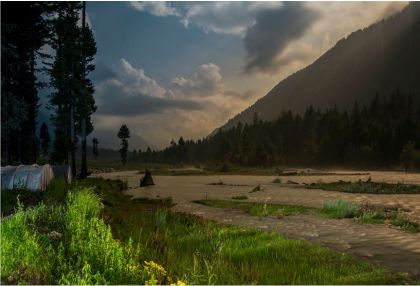
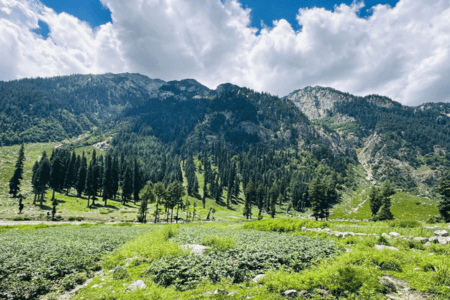
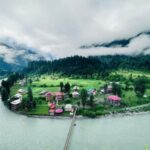
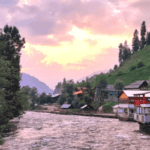
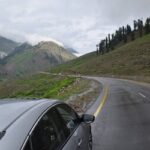
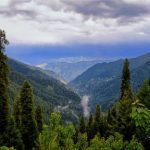
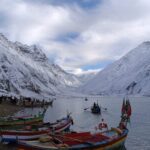
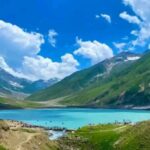
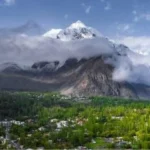
Kumrat Valley is located in the Upper Dir District of Khyber Pakhtunkhwa, Pakistan, approximately 400 km (a 9-hour drive) from Islamabad. It sits opposite the Gabral area in Swat Kohistan.
Kumrat Valley is a true gem of nature, renowned for its breathtaking beauty, gushing streams, and splendid mountains. As a result, it is emerging as a popular destination among various Pakistan Tour Packages. Before visiting with family and children, it is advisable to check the weather in the region.
Embark on an exciting journey to the mountains by booking your Kumrat Valley tour from Lahore. The distance from Lahore to Kumrat Valley is 720 kilometers, and the travel time via the motorway and the Dir-Chitral road is approximately 12-13 hours.
Begin in Lahore and follow the M-2 Motorway to Islamabad. Continue on the Swat Expressway from Colonel Sher Khan Interchange toward Chakdara, passing through Timergara, Dir, Bab-e-Kumrat, and Thal to reach Kumrat Forest.
Start in Lahore and travel on the M-2 Motorway to Islamabad. Proceed to Colonel Sher Khan Interchange and take the Swat Expressway to Chakdara. Continue through Mingora, Bahrain, Kalam Valley, and cross Badgoi Pass to arrive at Kumrat Jungle.
Approximately 370–385 kilometers, requiring 8–10 hours. Travelers take the Swat Motorway to Chakdara, then the N-45 highway through Dir and Thal, ending with a jeep ride into the valley. The route transitions from plains to hills and forests, presenting varied scenery.
Approximately 690–730 kilometers, taking 12–14 hours. The route follows the M-2 motorway to Islamabad and continues north. Many travelers split the trip over two days, stopping at scenic points along the way.
Approximately 330–380 kilometers, typically the fastest option for travelers from the north.
About 60–70 kilometers via Badgoi Pass, accessible only by 4×4 vehicles. This challenging 4–6 hour route offers impressive mountain views and is recommended for experienced travelers.
The Panjkora River is central to the valley, with glacier-fed turquoise waters flowing through meadows and forests. It offers peaceful locations for picnics and relaxation, enhancing the valley’s tranquil atmosphere.
Kumrat Waterfall (Abshar) is a striking cascade set among dense forests, fed by snowmelt, which creates strong flows and mist. Nearby, Kala Chashma and Do Kala Chashma are natural springs with clear, drinkable water. These shaded areas are ideal for short breaks.
Kala Chashma offers tranquil pools along river cliffs, while Do Jangah, where two rivers meet in untouched forests, offers a peaceful, secluded setting. Both are accessible by jeep and a short walk.
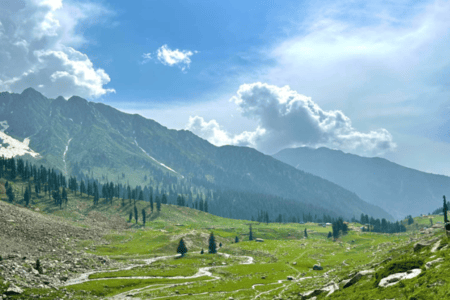
At higher altitudes, Jahaz Banda is a 3,100-meter-high meadow known for its grasslands, wildflowers, and panoramic mountain views. Reaching it requires a jeep ride and a 2–4 hour moderate hike. Camping here offers expansive night skies and a memorable experience.
Nearby Kund Banda is a secluded meadow with freshwater streams and a hidden waterfall, granting a quiet, intimate setting.
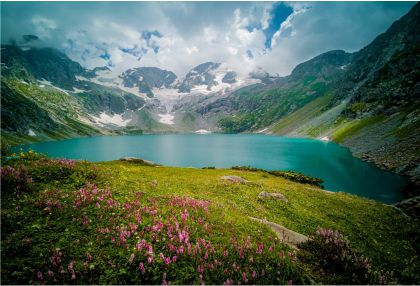
Katora Lake, including Mini Katora and Upper Katora, is a glacial lake at an elevation of about 3,500 meters. The steep trek from Jahaz Banda is challenging, but hikers are rewarded with turquoise waters that mirror the surrounding peaks and a sense of accomplishment.
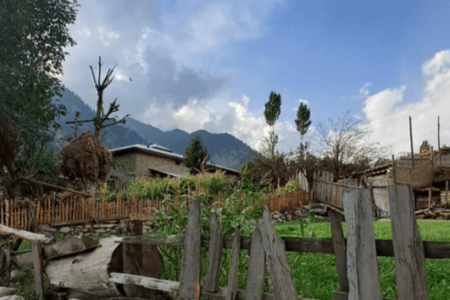
Thal Village offers insight into local culture, featuring the historic wooden Jamia Masjid, built in 1865 without nails, highlighting Pashtun craftsmanship and hospitality. Each location contributes to Kumrat’s unique character.
Jeep safaris transport visitors to remote areas of the valley inaccessible to standard vehicles. These rides traverse bumpy terrain and offer impressive views throughout the journey.
Horseback rides to Taki Top in Kumrat Valley follow delightful trails through forests and present panoramic views, guided by local experts.
Trekking options range from easy walks along the Panjkora River to difficult climbs toward Katora Lake. Every trek offers immersion in nature and access to meadows, waterfalls, and lakes.
Riverside camping with bonfires allows travelers to enjoy twilights under the stars and the sounds of the river. Bonfires provide warmth and a comfortable atmosphere.
Photography opportunities include waterfalls, alpine meadows, and turquoise rivers, allowing visitors to document their journey.
Trout fishing in clear streams offers a relaxing way to interact with nature and enjoy the peaceful surroundings.
We offer customized tour packages to Kumrat Valley that arrange all activities, including logistics, transportation, and guidance.
Proper preparation is essential for a successful visit to this remote valley.
Visitors should carry sufficient cash, as ATMs are scarce beyond Dir.
Respect for the environment is essential. Visitors should pack out all waste and minimize litter to help preserve Kumrat’s natural beauty.
Hiring local guides improves both safety and the overall experience, providing more profound knowledge of the valley’s natural and cultural heritage.
Book your adventurous Kumrat Valley tour from Islamabad, about 370 kilometers from the capital city. The journey typically takes 8 to 10 hours via the motorway and the Dir-Chitral road.
Kumrat is one of the most scenic valleys in KPK, attracting thousands of tourists each summer. The pleasant climate, with temperatures around 20 °C, makes it an ideal time to visit. In contrast, winter temperatures can drop to between -4 and -10 °C due to heavy snowfall, which can reach 3 to 11 feet, so spring and summer are the best seasons for travel to Kumrat Valley.
Kumrat Valley is undoubtedly one of the top destinations in our Northern Areas Tour Packages.
To reserve a tour, please pay a 40% advance through bank transfer, Easy Paisa, or Jazz Cash for local tourists.
We will send you a trip payment receipt or proof of ticket to your email. You will pay the remaining amount at the start of the trip. Happy traveling!
It is a wonderful tourist attraction in tranquil regions. While Swat Valley is renowned for its lush mountains, flowing River Swat, and stunning lakes, Kumrat Valley provides the perfect finishing touch with its river and beautiful woodlands.
Jazz and Telenor SIM cards will function in certain areas where 4G might not be available. Thall Village, however, does receive strong signals. Due to its remote location and rugged terrain, mobile network coverage and internet access in Kumrat Valley are limited. Visitors should be ready for poor connectivity during their visit.
A stay of 3 to 4 days is sufficient to visit the main tourist spots in the Kumrat Valley. In 5 days, you can conveniently visit all the significant attractions like Kala Chashma, Jahaz Banda Meadows, Kund Banda, Katora Lake, and more.
The best time to visit Kumrat Valley is from May to September. The temperature ranges from 5.6°C to 16.2°C, creating perfect conditions for outdoor activities. A large number of tourists visit during June, July, and August. These months, the landscape is vibrant meadows, streaming water, and flourishing plant life.
The simplest way to get to Kumrat Valley is via Timargarha. It is 8 km before Dir, a road branches off to the right, leading to Kumrat. The road up to Sheringal is fairly decent, but beyond that, you’ll encounter one of the roughest roads you’re likely to drive on… Thal, which serves as the primary market area of Kumrat. The rocky and uneven road will take a toll on your vehicles. It is highly advised not to use a transport with low ground clearance.